

Tuesday, September 28, 2004
The Mooncake Festival
Today (Tuesday 28th September 2004), the Chinese throughout the world celebrate the Mid-Autumn Festival. This day coincide with the 15th day of the eighth lunar month of the Chinese calendar. This festival is known in Chinese as “Zhong Qiu Jie”, which is one of the three important annual festivals in the Chinese Calender. The other two important annual festivals are the Chinese New Year (or Spring Festival, 1st day of the first lunar month) and the Dumpling Festival (or the Dragon Boat Festival, 5th day of the fifth lunar month).
Traditionally in China, it is the end of harvesting season in autumn and family members gather together to celebrate their successful harvests. The festival is associated with the consumption of moon cakes and the carrying of lanterns. Therefore, the festival is also known as the Mooncake Festival or the Lantern Festival. Coincidentally, the festival is also celebrated in Korea as the “Chusok Festival” and in Vietnam as the “Tet Trung Thu Festival”, both of which are also based on the celebration of a successful harvest and family reunion.
As mentioned, the festival began as a gathering of villagers to celebrate a successful harvest. How the festival became associated with the moon was loosely based on a legend. The story was that once there were ten suns taking turn to warm the earth. One day, all the ten suns suddenly appeared together and the earth started to burn. A young archer then came forward and shot down nine suns. Because of his heroic action, the villages supported him as the King. However, the good life he enjoyed later turned him into a tyrant. And he had some secrete herbs to keep him immortal. To save the people from his tyranny, his wife Chang Er stole the herbs and consumed all of them. She then floated away to the moon to become the moon fairy. Hence during the festival, people look to the moon to search for the moon fairy Chang Er.
At the end of the Mongolian dynasty (Yuan dynasty) in China in 14th century (1368AD), a peasant by the name of Zhu Yuan Zhang staged an uprising against the Mongolian army. Zhu knew that the Moon Festival was drawing near. He ordered his rebellious army to make special cakes to be distributed to all the peoples throughout the country for this festival. Packed into each cake was a message urging the people to rise up against the Mongolian army on the festive night. Zhu eventually succeeded in overthrowing the Mongolian rule based on the uprising on the night of the Moon Festival and became the first emperor of the Ming dynasty. This special cake now becomes the famous mooncake.
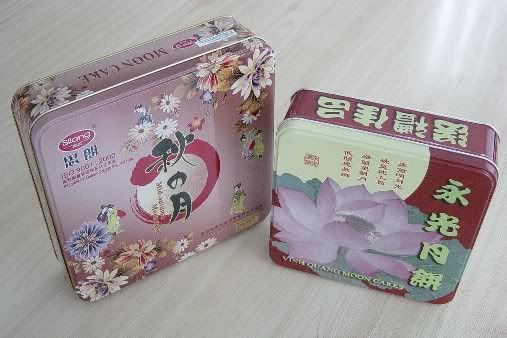
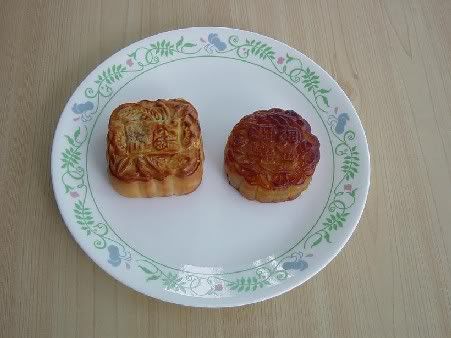
Although man has long conquered the moon, old traditions die hard. Today Zhong Qiu Jie is extensively celebrated throughout the world. Where there are Chinese or people of Chinese origin, there are mooncakes and lanterns for sales during the festival period. Today, the festival is celebrated not so much on the appreciation of the moon, or a successful harvest, or the overthrowing of the Mongolian dynasty, it is more of an occasion of family reunion, where travellers make it an occasion to return homes. Long gone is the message inside the mooncake. The inside of the mooncake is now filled with a variety of goodies such as egg yolk, lotus nuts, hams and other delicacies. The mooncakes are now used extensively as a gift for friends and relatives in appreciation for a good relationship throughout the year.
Traditionally in China, it is the end of harvesting season in autumn and family members gather together to celebrate their successful harvests. The festival is associated with the consumption of moon cakes and the carrying of lanterns. Therefore, the festival is also known as the Mooncake Festival or the Lantern Festival. Coincidentally, the festival is also celebrated in Korea as the “Chusok Festival” and in Vietnam as the “Tet Trung Thu Festival”, both of which are also based on the celebration of a successful harvest and family reunion.
As mentioned, the festival began as a gathering of villagers to celebrate a successful harvest. How the festival became associated with the moon was loosely based on a legend. The story was that once there were ten suns taking turn to warm the earth. One day, all the ten suns suddenly appeared together and the earth started to burn. A young archer then came forward and shot down nine suns. Because of his heroic action, the villages supported him as the King. However, the good life he enjoyed later turned him into a tyrant. And he had some secrete herbs to keep him immortal. To save the people from his tyranny, his wife Chang Er stole the herbs and consumed all of them. She then floated away to the moon to become the moon fairy. Hence during the festival, people look to the moon to search for the moon fairy Chang Er.
At the end of the Mongolian dynasty (Yuan dynasty) in China in 14th century (1368AD), a peasant by the name of Zhu Yuan Zhang staged an uprising against the Mongolian army. Zhu knew that the Moon Festival was drawing near. He ordered his rebellious army to make special cakes to be distributed to all the peoples throughout the country for this festival. Packed into each cake was a message urging the people to rise up against the Mongolian army on the festive night. Zhu eventually succeeded in overthrowing the Mongolian rule based on the uprising on the night of the Moon Festival and became the first emperor of the Ming dynasty. This special cake now becomes the famous mooncake.
Although man has long conquered the moon, old traditions die hard. Today Zhong Qiu Jie is extensively celebrated throughout the world. Where there are Chinese or people of Chinese origin, there are mooncakes and lanterns for sales during the festival period. Today, the festival is celebrated not so much on the appreciation of the moon, or a successful harvest, or the overthrowing of the Mongolian dynasty, it is more of an occasion of family reunion, where travellers make it an occasion to return homes. Long gone is the message inside the mooncake. The inside of the mooncake is now filled with a variety of goodies such as egg yolk, lotus nuts, hams and other delicacies. The mooncakes are now used extensively as a gift for friends and relatives in appreciation for a good relationship throughout the year.
