

Wednesday, June 30, 2004
Buses on Strike
Sydney and Newcastle buses are on strike this morning to support the pay rise claim by their maintenance workers. The strike hit hardest at the most vulnerable user groups who are mostly office workers, students and others who do not drive to work, to schools or to university. Worst of all are those students who have to attend examinations. They have to make alternative transport including paying high prices for taxis which they hardly can afford. Above all, the lives of many people have been disrupted by the strike.
A lot of people who own cars do not drive to work. They preferred to take public transport to avoid driving through the heavy traffic. Also they are not in a position to pay the huge parking fees charged by the city car parks. To some extend, these peoples are contributing in their own way to reducing environmental pollution generated by the cars’ exhaust fumes.
Is the plight of these disadvantaged groups taken into consideration when planning for the strike? It is likely that the plight of these people have been used to the advantage of the union in bargaining for a better wage and better working conditions. Incidentally, nurses from two major hospitals are also on strike today to protest against under staffing and to claim for better working condition. Again, it is the sick that will suffer from this strike.
Is there a better way to negotiate for better work condition other than having a strike? Should the employers sitting in their air-conditioned offices pay more attention to the needs of their workers? Can equity and fairness be achieved without disruption?
A lot of people who own cars do not drive to work. They preferred to take public transport to avoid driving through the heavy traffic. Also they are not in a position to pay the huge parking fees charged by the city car parks. To some extend, these peoples are contributing in their own way to reducing environmental pollution generated by the cars’ exhaust fumes.
Is the plight of these disadvantaged groups taken into consideration when planning for the strike? It is likely that the plight of these people have been used to the advantage of the union in bargaining for a better wage and better working conditions. Incidentally, nurses from two major hospitals are also on strike today to protest against under staffing and to claim for better working condition. Again, it is the sick that will suffer from this strike.
Is there a better way to negotiate for better work condition other than having a strike? Should the employers sitting in their air-conditioned offices pay more attention to the needs of their workers? Can equity and fairness be achieved without disruption?
Tuesday, June 29, 2004
I received this e-mail the other day. It says; “Days are too busy, Hours are too few, Seconds are too fast, but there is always time to send an e-mail to a precious friend like you !!” How amazing!
We always whinge that we do not have enough time. We are unable to catch up with friends and relatives. We are always busy, busy and busy. So we lost contact with friends and we do not communicate with them for long period. Sooner or later, that friendship fades into the distance.
Thanks to the advancement in technology, we now have the latest telephone, the e-mail (or the incoming G-mail), the Internet with its messages facility, chat room and above all, the blog for us to communicate more effectively and efficiently.
So what holds us back in communicating with each other? If we have nothing special or anything fantastic to blog about, what is the difficulty of sending a simple e-mail just to say hello? It only takes a few seconds and you might make a big different to the person receiving the e-mail. Are we using time or lack of time as an excuse to live our lives in our own cocoons?.
We always whinge that we do not have enough time. We are unable to catch up with friends and relatives. We are always busy, busy and busy. So we lost contact with friends and we do not communicate with them for long period. Sooner or later, that friendship fades into the distance.
Thanks to the advancement in technology, we now have the latest telephone, the e-mail (or the incoming G-mail), the Internet with its messages facility, chat room and above all, the blog for us to communicate more effectively and efficiently.
So what holds us back in communicating with each other? If we have nothing special or anything fantastic to blog about, what is the difficulty of sending a simple e-mail just to say hello? It only takes a few seconds and you might make a big different to the person receiving the e-mail. Are we using time or lack of time as an excuse to live our lives in our own cocoons?.
Monday, June 28, 2004
Baby Bonus
The Australian Government has announced a baby bonus of $3,000 to be paid to all mothers of newborns after 1st July 2004. This is a noble idea that the money can help to relieve the financial burden facing families, in particular the socially disadvantage families of having new borns.
Recently, the Government had made a one-off payment to mothers of lower income families at $600 for each child. However, there has been an interesting observation reported. It was reported that the money received by the mother have been used to purchase CDs, playstation and other luxuries other than the basic food and clothing. Worst of all, there is a genuine concern that mothers from a certain socially disadvantage group might spemd the money on cigarettes and drinks. Basically, there is no mean to ensure that the $3000 baby bonus is to be used on the welfare of the baby.
One single mother whose only income is the welfare payment from the Government had appeared on TV interview expressing her intention to have six children. A Principal in a not so effluent school has reported that he knew of two of his schoolgirls planning to have babies in order to quality for the baby bonus. Incidentally, this school has a program to encourage young school girls having babies to stay on the school to complete the high school education instead of dropping out of the education system. Apparently, to these young girls, falling pregnant and having babies would not have an effect on their continuing of secondary education. Many newspapers has reported that there is now a fear that young girls are deliberately falling pregnant due to this bonus payment.
It is hard to imaging what effect $3000 has on a young girl of 13 or 16 who have never in the life in possession of such large sum. There is no mechanism in place to ensure that the money is going to be spent for the wellbeing of the child. A suggestion that the money be paid in periodic payment of smaller sum has not been adopted by the Government.
Anybody who has the experience of raising a child knows that it takes far more money than the $3000 to raise and educate a child to adulthood. However, will those teenage girls and those socially disadvantaged families think about their long-term responsibility before planning to have a baby? Should the baby bonus be a factor in planning to have a baby? So is the baby still laughing?

Recently, the Government had made a one-off payment to mothers of lower income families at $600 for each child. However, there has been an interesting observation reported. It was reported that the money received by the mother have been used to purchase CDs, playstation and other luxuries other than the basic food and clothing. Worst of all, there is a genuine concern that mothers from a certain socially disadvantage group might spemd the money on cigarettes and drinks. Basically, there is no mean to ensure that the $3000 baby bonus is to be used on the welfare of the baby.
One single mother whose only income is the welfare payment from the Government had appeared on TV interview expressing her intention to have six children. A Principal in a not so effluent school has reported that he knew of two of his schoolgirls planning to have babies in order to quality for the baby bonus. Incidentally, this school has a program to encourage young school girls having babies to stay on the school to complete the high school education instead of dropping out of the education system. Apparently, to these young girls, falling pregnant and having babies would not have an effect on their continuing of secondary education. Many newspapers has reported that there is now a fear that young girls are deliberately falling pregnant due to this bonus payment.
It is hard to imaging what effect $3000 has on a young girl of 13 or 16 who have never in the life in possession of such large sum. There is no mechanism in place to ensure that the money is going to be spent for the wellbeing of the child. A suggestion that the money be paid in periodic payment of smaller sum has not been adopted by the Government.
Anybody who has the experience of raising a child knows that it takes far more money than the $3000 to raise and educate a child to adulthood. However, will those teenage girls and those socially disadvantaged families think about their long-term responsibility before planning to have a baby? Should the baby bonus be a factor in planning to have a baby? So is the baby still laughing?
Friday, June 25, 2004
Managers Who Supervise
This group of people in office attire appeared to have extended lunch hours. I noticed that they were spending considerable long period for lunch break over the last few days. It turned out that their managers are away, one on annual leaves, one away overseas attending conference and the third one, a female, on maternity leaves. So understandably, when the cat is away, the mouse comes out to play.
This is a sorry state for the company. They have managers who supervise, not manage. A manager’s job is to manage the company, to provide a management system and procedures for work to be carried out in a quality manner, to motivate the staff to encourage productivity and to achieve target. Above all, manager must exhibit fine personal quality to lead and foster teamwork. In that way, work will be continued whether the manager is around or not at a particular time.
Manager who supervises is doomed to fail. Are we doing the right things as manager? Are we practicing our management skill and knowledge properly?
This is a sorry state for the company. They have managers who supervise, not manage. A manager’s job is to manage the company, to provide a management system and procedures for work to be carried out in a quality manner, to motivate the staff to encourage productivity and to achieve target. Above all, manager must exhibit fine personal quality to lead and foster teamwork. In that way, work will be continued whether the manager is around or not at a particular time.
Manager who supervises is doomed to fail. Are we doing the right things as manager? Are we practicing our management skill and knowledge properly?
Thursday, June 24, 2004
You Choose, I Decide
Consider this situation. A project manager and his client were having a meeting.
Project Manager: “Tell me where I should put up the project sign board for this project.”
Client: “ Any where you think fit”
Project: “ No. Mr. you are the client, I would like to your input and your decision.”
Client: “OK. Let put it here” (Client draw a cross on the plan in front of him.)
Project Manager: “ Oh No. I don’t think this is a good location. It is better to be here” (Project Manager draw a cross at another location on the Plan)
Client; “ If my choice is not good, why did you asked me to decide in the first place.”
Project manager: “ Eh Eh Eh, Ya, we need to consider all situation. Eh Eh Eh....”
How often do we pretend to seek advice from others while we already make up my mind on what to do? We try to appear as democratic but we are actually autocratic. In doing so, we are no more than a bunch of hypocrites.
Project Manager: “Tell me where I should put up the project sign board for this project.”
Client: “ Any where you think fit”
Project: “ No. Mr. you are the client, I would like to your input and your decision.”
Client: “OK. Let put it here” (Client draw a cross on the plan in front of him.)
Project Manager: “ Oh No. I don’t think this is a good location. It is better to be here” (Project Manager draw a cross at another location on the Plan)
Client; “ If my choice is not good, why did you asked me to decide in the first place.”
Project manager: “ Eh Eh Eh, Ya, we need to consider all situation. Eh Eh Eh....”
How often do we pretend to seek advice from others while we already make up my mind on what to do? We try to appear as democratic but we are actually autocratic. In doing so, we are no more than a bunch of hypocrites.
Wednesday, June 23, 2004
The Late Comers
This was on the news the other day. The holiday plans of many travellers were ruined after they arrived five minutes late at the airport. Normally, the airlines would have made some due allowance if they can manage. But these people have bought the very economic air tickers on specials recently. They were refused entry and there were no refund in accordance with the conditions of the sales. This must be a costly lesson for not being punctual.
Very often, people arrive late for meeting, for dinner and at a lot of occasions. For some, particularly those who hold positions of power and command, being late is status symbol, a way to show off one’s importance. By coming late for an event, the rest of the people have to wait for them, so they can make a grand entry. They had no idea how much time have been wasted by people waiting for them. Since they are not suffering any consequential loss, like the traveller above, these people continue to be late.
There are times when people are running late. These are unforseen circumstances, such as being caught in a traffic jam. However, these circumstances can be eliminated or minimised with proper planning. Sometimes, being late is just a habit. Nevertheless, there is always a cost for being late.
Are we always late for an event? Do we purposely come late to show our importance? Or have we learned from the lessons for being late?
Very often, people arrive late for meeting, for dinner and at a lot of occasions. For some, particularly those who hold positions of power and command, being late is status symbol, a way to show off one’s importance. By coming late for an event, the rest of the people have to wait for them, so they can make a grand entry. They had no idea how much time have been wasted by people waiting for them. Since they are not suffering any consequential loss, like the traveller above, these people continue to be late.
There are times when people are running late. These are unforseen circumstances, such as being caught in a traffic jam. However, these circumstances can be eliminated or minimised with proper planning. Sometimes, being late is just a habit. Nevertheless, there is always a cost for being late.
Are we always late for an event? Do we purposely come late to show our importance? Or have we learned from the lessons for being late?
Tuesday, June 22, 2004
The Dumpling or Dragon Boat Festival
Today (Tuesday 22 June 2004) is the fifth day of the fifth month of the Chinese Lunar calendar. Today the Chinese around the world celebrate the Dumpling Festival.
According to the Chinese culture and traditions, the Dumpling Festival is one of the three important festivals celebrated by the Chinese community. The other two important annual festivals are the Chinese New Year (or Spring Festival) and the Mid-Autumn Festival (or the Moon Cake Festival).
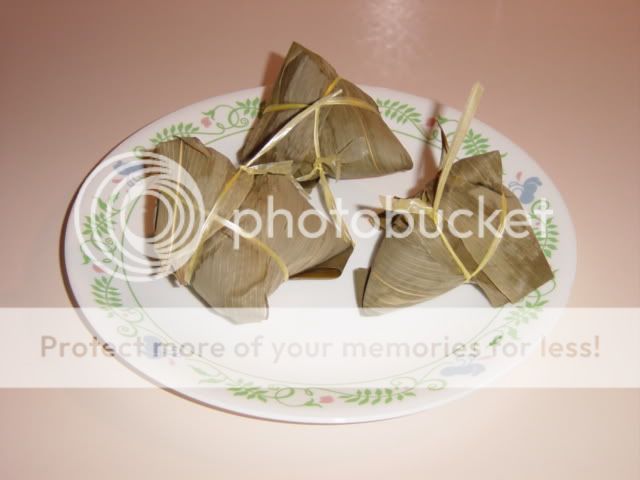
To celebrate this Dumpling Festival, the Chinese make dumplings (or “Zong Zi” in Chinese) from glutinous rice wrapped in bamboo leaves. The dumpling is made by placing a spoonful of glutinous rice onto two bamboo leaves. Then other ingredients are added into the rice. These may include roast pork, black mushrooms, chestnuts and salted eggs. Each dumpling is wrapped individually and tied as a group. The dumplings are placed into boiling water and cooked for about two hours. The dumplings can be eaten hot or cold and they can be kept for a few days. So the dumpling was ideal for travellers in the ancient times.
The Dumpling Festival is known “Duan Wu Jie” in Chinese. During the festival period, Dragon Boat Races are held where there are Chinese community. Actually, the festival is meant to commemorate a patriot and great poet by the name of “Qu Yuan’ who was a minister to a King of Chu Kingdom in China in around 340 BC.
Qu Yuan was a good minister and was very popular with the people. However, the King late listened to other evil ministers and lost faith in him. Eventually, he was banished by the King. Without Qu Yuan’s advice, the King was finally defeated by another King known as “Qin Shi Huang” from the neighbouring Qin Kingdom. (Qin Shi Huang later became the first emperor of China.)
Qu Yuan was very sad. On the fifth day of the fifth month, he tied himself with a piece of rock and jumped into a river and drowned. The villages were worried that the fishes might eat his body remain, so they threw rice into the river to feed the fishes so the fished would not nibble on the remains of Qu Yuan. To prevent the rice from dispersing quickly and carried away by the current, the villages wrapped the rice in bamboo leaves. That was the beginning of the rice dumpling. At the same time, the villages also row out their boats and beat drums to scare off the fishes. That was the beginning of the dragon boat races.
Today eating rice dumplings is more like a traditional practice of culture, and dragon boat races have spread round the world to become a sporting event.
The below picture shows the dumplings wrapped in bamboo leaves.
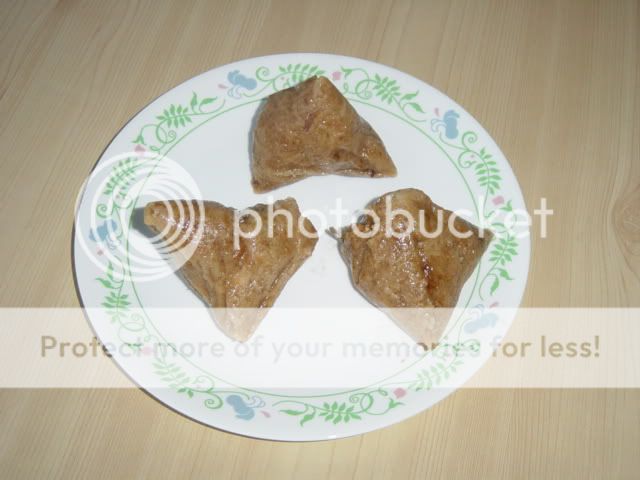
This is another picture showing the dumplings with the bamboo leaves removed
The below picture shows the dragon boat race in Sydney Darling Harbour.

According to the Chinese culture and traditions, the Dumpling Festival is one of the three important festivals celebrated by the Chinese community. The other two important annual festivals are the Chinese New Year (or Spring Festival) and the Mid-Autumn Festival (or the Moon Cake Festival).
To celebrate this Dumpling Festival, the Chinese make dumplings (or “Zong Zi” in Chinese) from glutinous rice wrapped in bamboo leaves. The dumpling is made by placing a spoonful of glutinous rice onto two bamboo leaves. Then other ingredients are added into the rice. These may include roast pork, black mushrooms, chestnuts and salted eggs. Each dumpling is wrapped individually and tied as a group. The dumplings are placed into boiling water and cooked for about two hours. The dumplings can be eaten hot or cold and they can be kept for a few days. So the dumpling was ideal for travellers in the ancient times.
The Dumpling Festival is known “Duan Wu Jie” in Chinese. During the festival period, Dragon Boat Races are held where there are Chinese community. Actually, the festival is meant to commemorate a patriot and great poet by the name of “Qu Yuan’ who was a minister to a King of Chu Kingdom in China in around 340 BC.
Qu Yuan was a good minister and was very popular with the people. However, the King late listened to other evil ministers and lost faith in him. Eventually, he was banished by the King. Without Qu Yuan’s advice, the King was finally defeated by another King known as “Qin Shi Huang” from the neighbouring Qin Kingdom. (Qin Shi Huang later became the first emperor of China.)
Qu Yuan was very sad. On the fifth day of the fifth month, he tied himself with a piece of rock and jumped into a river and drowned. The villages were worried that the fishes might eat his body remain, so they threw rice into the river to feed the fishes so the fished would not nibble on the remains of Qu Yuan. To prevent the rice from dispersing quickly and carried away by the current, the villages wrapped the rice in bamboo leaves. That was the beginning of the rice dumpling. At the same time, the villages also row out their boats and beat drums to scare off the fishes. That was the beginning of the dragon boat races.
Today eating rice dumplings is more like a traditional practice of culture, and dragon boat races have spread round the world to become a sporting event.
The below picture shows the dumplings wrapped in bamboo leaves.
This is another picture showing the dumplings with the bamboo leaves removed
The below picture shows the dragon boat race in Sydney Darling Harbour.
Monday, June 21, 2004
Past and Present
Consider this situation. A driver and his passenger stopped at the traffic light. Obviously the light was red.
Passenger “ Why do you stop?”
Driver “It is red light.”
Passenger “So you must stop the car?”
Driver “Yes.”
The light then turned green and the drive put on gear and moved on.
Passenger “ Why are you moving? You should stop”
Driver “ It is now green light”
Passenger “But you just said that it was red light?”
Driver “It was red, but now it is green”
Passenger “But I clearly heard that you said red.”
Driver “It was red. It is green now”
Passenger “So you did said red. Didn’t you said red?”
So the argument continued ……
We normally react to situation demand and change our action when the situation changes. Just like the driver above.
Sometimes we behave like the passenger above. The past lingers on and stayed on our mind. We cannot adapt to the change and we are reluctant to change our action and behaviour to suit the new situation. We are blinded by our love or hatred for the past that we intentionally ignored the present. The past lingers on and become blurred with the present.
We remember the past. But we need to move away from the past into the present and look forward to the future.
Passenger “ Why do you stop?”
Driver “It is red light.”
Passenger “So you must stop the car?”
Driver “Yes.”
The light then turned green and the drive put on gear and moved on.
Passenger “ Why are you moving? You should stop”
Driver “ It is now green light”
Passenger “But you just said that it was red light?”
Driver “It was red, but now it is green”
Passenger “But I clearly heard that you said red.”
Driver “It was red. It is green now”
Passenger “So you did said red. Didn’t you said red?”
So the argument continued ……
We normally react to situation demand and change our action when the situation changes. Just like the driver above.
Sometimes we behave like the passenger above. The past lingers on and stayed on our mind. We cannot adapt to the change and we are reluctant to change our action and behaviour to suit the new situation. We are blinded by our love or hatred for the past that we intentionally ignored the present. The past lingers on and become blurred with the present.
We remember the past. But we need to move away from the past into the present and look forward to the future.
Friday, June 18, 2004
Good Feng Shui
I was reading some articles on Feng Shui and my friend came along. He was curious. I explained that Feng Shui is actually “the ancient Chinese art of environmental science”. It is about interior decoration of the house or building, the air ventilation system of the building (or the flow of “Chi”), and the landscaping outside the building. I ended up giving him a few practical tips about Feng Shui.
A month later when I met him, he looked dejected and not too happy. He said that he followed what I told him about good Feng Shui but nothing happened! I immediately congratulated him of his good Feng Shui. For the last one month, nothing happened! How fantastic! For the last one month, he did not get fired by his boss, no one ram his car from behind, he did not suffer a major sickness, the ceiling light shade didn’t fall on him. Aren’t those fantastic?
How often we expect some quick fix, some quick gain? We expect to rearrange some pots of flowers or put a bowl of gold fish on the table and expect to strike a mini lottery or to gain a job promotion. Are we asking for too much?
A month later when I met him, he looked dejected and not too happy. He said that he followed what I told him about good Feng Shui but nothing happened! I immediately congratulated him of his good Feng Shui. For the last one month, nothing happened! How fantastic! For the last one month, he did not get fired by his boss, no one ram his car from behind, he did not suffer a major sickness, the ceiling light shade didn’t fall on him. Aren’t those fantastic?
How often we expect some quick fix, some quick gain? We expect to rearrange some pots of flowers or put a bowl of gold fish on the table and expect to strike a mini lottery or to gain a job promotion. Are we asking for too much?
Thursday, June 17, 2004
The Truth Hurts
Everyone tells lies at some point of time in life. Some lies are blatant lies with intention to hurt, to deceive and to gain from the lies. Some lies are so called “white lies” to protect or to ease an embarrassing situation. Sometimes lies are everywhere so much so that people get used to them and happy to accept them as normal, because the truth hurts. Sometimes, the more people try to cover the truth, the worse the situation becomes. So there are more lies.
Beneath the superficial portraying of feeling, we know that everyone wants the truth. The basic desire of a human being is to demand truth in the form of transparency and accountability. Truth can be ensured with proper systems and process, through freedom of speech and more important through our inner good nature. The truth might hurt, but desire for truth can never be extinguished.
Beneath the superficial portraying of feeling, we know that everyone wants the truth. The basic desire of a human being is to demand truth in the form of transparency and accountability. Truth can be ensured with proper systems and process, through freedom of speech and more important through our inner good nature. The truth might hurt, but desire for truth can never be extinguished.
Wednesday, June 16, 2004
Seeing with your mind
Once there was a poet and a monk. One fine beautiful day, they both sat cross-legged and relaxing in a mountain clearing next to a stream. The poet suddenly had a thought and asked the monk how he now looked like. The monk looked at the poet and thought that at that sitting posture, sitting upright and cross legged, the poet would resemble a Buddha in a sitting position. So the monk replied the poet that he look like a Buddha. The poet was very happy. The monk then asked the poet the same question about how he looked like. At this point, the poet was naughty and told the monk that at that sitting position, he looked a heap of cow dung, as the monk was rather plum at the bottom and taper up in the triangular shape. One hearing this, the monk was rather happy and told the poet that it was a good reply.
That day, the poet went back very happy and told his sister that he had played a trick on the monk and yet the monk was happy rather than angry. On hearing this, the sister laughed and told her brother. “ My, dear brother, you have lost to the monk. The monk has a sincere heart and a pure mind, so he only saw your good posture and thought that you looked like a Buddha. As for you, you have a wicked heart and a crooked mind, so you saw the monk as a heap of cow dung, because you could not see other better images.” On hearing this, the poet then realised that he was actually inferior to the monk. That was why the monk was laughing instead of being annoyed being called cow dung.
One sees things with one’s heart and mind. If our hearts are not sincere, and our minds not pure, we cannot see beautiful things.
That day, the poet went back very happy and told his sister that he had played a trick on the monk and yet the monk was happy rather than angry. On hearing this, the sister laughed and told her brother. “ My, dear brother, you have lost to the monk. The monk has a sincere heart and a pure mind, so he only saw your good posture and thought that you looked like a Buddha. As for you, you have a wicked heart and a crooked mind, so you saw the monk as a heap of cow dung, because you could not see other better images.” On hearing this, the poet then realised that he was actually inferior to the monk. That was why the monk was laughing instead of being annoyed being called cow dung.
One sees things with one’s heart and mind. If our hearts are not sincere, and our minds not pure, we cannot see beautiful things.
Tuesday, June 15, 2004
The Path of Life
The path of life is exciting, adventurous and full of happenings along the way. The path in life is also lined with danger, pitfall, temptation and other evils. We need to be cautious when we walk, so that we do not fall. It is to be a long journey or an important journey; we take advice and spend time planning, before we venture out. No matter how good our planning, or how cautious we are, we sometimes make mistake and we trip and fall. The goal in life is not to avoid falling. The goal in life is the continuation of the journey. So if we did fall, we should get up as quickly as possible and walk again. We need to be brave and determined. We should continue with our journey, more experienced and wiser. And we fall less.
Sunday, June 13, 2004
Reflection of the other side

The water reflects the sky. What is your reflection?
Thursday, June 10, 2004
Happiness Comes From Within.
A newly acquainted friend once asked me why I was so happy. The question caught me by surprise. So I asked him why he asked that question. He said that he had been observing me wearing a smile all morning. I ponder for a moment and thought there was really no special happy occasion happened or about to take place. So I replied that perhaps I just felt happy for no special reason.
After that, I gave the issue a hard thought. Must there be a special occasion or joyful event to trigger happiness in people? Are such occurrences as receiving a present, a birthday celebration, an outing, passing of an examination, obtaining a job promotion or even striking the lottery and many others, important ingredient in making a person happy? How many times have we heard of people saying “why can’t you make me happy?” or phrases like “why can’t you do something to make me happy?” Looking around, I noticed that many who are surrounded with richness and the luxury of life are feeling unhappy. So is there anything others can do to make these people happy?
When I wake up each day, I see the sun just rising. I can hear the birds singing. So I thought, what a magnificent day. I look forward to the day and the challenges ahead. Perhaps these are the very basic things that make me happy. Perhaps these are the very basic things that those unhappy people overlooked.
There is a choice here. We can choose to be happy or we can choose to be unhappy. We do not need a special event or special happening to enable us to be happy. We should be happy for what we are. Happiness comes from within us, not from outside us.
After that, I gave the issue a hard thought. Must there be a special occasion or joyful event to trigger happiness in people? Are such occurrences as receiving a present, a birthday celebration, an outing, passing of an examination, obtaining a job promotion or even striking the lottery and many others, important ingredient in making a person happy? How many times have we heard of people saying “why can’t you make me happy?” or phrases like “why can’t you do something to make me happy?” Looking around, I noticed that many who are surrounded with richness and the luxury of life are feeling unhappy. So is there anything others can do to make these people happy?
When I wake up each day, I see the sun just rising. I can hear the birds singing. So I thought, what a magnificent day. I look forward to the day and the challenges ahead. Perhaps these are the very basic things that make me happy. Perhaps these are the very basic things that those unhappy people overlooked.
There is a choice here. We can choose to be happy or we can choose to be unhappy. We do not need a special event or special happening to enable us to be happy. We should be happy for what we are. Happiness comes from within us, not from outside us.
Wednesday, June 09, 2004
The best insurance against speeding.
In many cases of accidents, it has been shown that speed is a major contributing factor. In accidents where speed was a factor, the injury sustained was serious and often fatality occurred. To counter this untoward effect, the government and local councils had set up speed limits and reduced speed limits in many suburbs and in around schools to as low as 40 km per hour. More speed cameras have been installed and the quantum of speeding fine has also been steadily increased.
There is now a recent report that a young guy had set up an insurance scheme to protect the drivers against speeding fines. For a moderate premium, a driver can insure himself that if he received a speeding fine, the insurance would pay for his fines. Hence the insured driver can continue to speed without the worry of having to pay hefty speeding fines.
Let alone the viability of such an insurance scheme, the concept is fundamentally flawed. The scheme may protect the insured driver’s against his financial loss; it does not in any way reduce his risk of involving in an accident. On the contrary, the risk of an accident would increase with such a scheme.
The best insurance against paying speeding fines is not to speed, and the insurance is free.
There is now a recent report that a young guy had set up an insurance scheme to protect the drivers against speeding fines. For a moderate premium, a driver can insure himself that if he received a speeding fine, the insurance would pay for his fines. Hence the insured driver can continue to speed without the worry of having to pay hefty speeding fines.
Let alone the viability of such an insurance scheme, the concept is fundamentally flawed. The scheme may protect the insured driver’s against his financial loss; it does not in any way reduce his risk of involving in an accident. On the contrary, the risk of an accident would increase with such a scheme.
The best insurance against paying speeding fines is not to speed, and the insurance is free.
Tuesday, June 08, 2004
Of Gifts And Love
We present gifts to someone we love or we care. We buy our love ones or friends birthday presents, Christmas presents, Valentine Day presents, Mother’s and Father’s day presents, wedding presents, presents for moving to new office, presents for achieving success, presents for providing help, and presents for all occasions and all issues. We also give presents whenever we feel like to when there is no special occasion. We give present to show our love, our care and our appreciation or as a reward.
So giving and receiving presents for special occasions has become the norm and a necessity in life. The expectation for receiving quality and valuable present has been on the rise. Now that so many families with financial constraints are burdened with the issue of giving presents during festive seasons or the celebration of a joyful occasion. This is a sad thing as the expectation of a happy occasion has resulted in financial burden and worry.
I believe there are options and alternatives. Material presents may bring momentary joy which fade in time. For a child, the best present may not necessary be the most expensive toys. A less expensive toy coupled with an outing to the park may proved to be a better combination. For a young family, where they have accumulated little material asset, the best present from the husband to his wife may not necessary be the expensive roses and dining in exclusive restaurant. It may be better to just have a simple dinner in an ordinary restaurant with the extra money saved put into a life insurance. In the case of an untoward event, the family is well catered for. This is particularly so in countries where social and government welfare is minimum or not available. Such gift as insurance, the benefit may not be realised in most cases, but it is definitely a gift of eternal love.
Depending on circumstances, one gift may be better than the other. Whatever gift we provide, it is worthwhile to put a little thought into it and be innovative. After all, gifts are tokens of love. It should not only be confined to earthly materials.
So giving and receiving presents for special occasions has become the norm and a necessity in life. The expectation for receiving quality and valuable present has been on the rise. Now that so many families with financial constraints are burdened with the issue of giving presents during festive seasons or the celebration of a joyful occasion. This is a sad thing as the expectation of a happy occasion has resulted in financial burden and worry.
I believe there are options and alternatives. Material presents may bring momentary joy which fade in time. For a child, the best present may not necessary be the most expensive toys. A less expensive toy coupled with an outing to the park may proved to be a better combination. For a young family, where they have accumulated little material asset, the best present from the husband to his wife may not necessary be the expensive roses and dining in exclusive restaurant. It may be better to just have a simple dinner in an ordinary restaurant with the extra money saved put into a life insurance. In the case of an untoward event, the family is well catered for. This is particularly so in countries where social and government welfare is minimum or not available. Such gift as insurance, the benefit may not be realised in most cases, but it is definitely a gift of eternal love.
Depending on circumstances, one gift may be better than the other. Whatever gift we provide, it is worthwhile to put a little thought into it and be innovative. After all, gifts are tokens of love. It should not only be confined to earthly materials.
Monday, June 07, 2004
Life is a journey
Life is a journey. It can be a long journey with a far destination. It can be a series of individual short journeys with many stop over or rest places in between. We started our journeys from birth. Along the journey, we feel things, we see things, we experience things, we learn things, we interact with others and we express. We do so many things along the journey of life.
Along the journey, we triumphed at times, and we tripped at other times. If we did trip, we need to pick ourself up and continue the journey. Or else, the journey would end. This requires courage and determination.
The end of the journey is the destination. For some, getting to the destination is very important. So they hurry along to get to their destination. They missed the beautiful scenery along the way, the warmth of the family, the happiness of friendship, and the singing of the birds. When they reached their destination, they realise that there is really not much to see there, compared to the scenery along the journey. And there is no going back to the same journey. If they had time left they may venture into new journey. The smart ones, learned from their experience and slow down to enjoy the journey, the other hurry past to continue to reach the next destination.
Along the journey, we learn to walk better, we picked up more skills and we trip less. We may walk faster, but we must enjoy the journey. We make friends and partner along the journey, so we are not alone. We enjoy each other company and we encourage each other as we walk along.
Sometimes, during the journey, we need to pause for a rest, to ponder, to re-evaluate. Am I going on the right track? Am I heading for the right destination? Do I need to change direction? Is this well beaten track best for me? Do I need to try new track? What ever your decision, follow your heart, evaluate with your mind, determine to succeed and above all, you must be brave.
Most of all we must enjoy the journey.
Along the journey, we triumphed at times, and we tripped at other times. If we did trip, we need to pick ourself up and continue the journey. Or else, the journey would end. This requires courage and determination.
The end of the journey is the destination. For some, getting to the destination is very important. So they hurry along to get to their destination. They missed the beautiful scenery along the way, the warmth of the family, the happiness of friendship, and the singing of the birds. When they reached their destination, they realise that there is really not much to see there, compared to the scenery along the journey. And there is no going back to the same journey. If they had time left they may venture into new journey. The smart ones, learned from their experience and slow down to enjoy the journey, the other hurry past to continue to reach the next destination.
Along the journey, we learn to walk better, we picked up more skills and we trip less. We may walk faster, but we must enjoy the journey. We make friends and partner along the journey, so we are not alone. We enjoy each other company and we encourage each other as we walk along.
Sometimes, during the journey, we need to pause for a rest, to ponder, to re-evaluate. Am I going on the right track? Am I heading for the right destination? Do I need to change direction? Is this well beaten track best for me? Do I need to try new track? What ever your decision, follow your heart, evaluate with your mind, determine to succeed and above all, you must be brave.
Most of all we must enjoy the journey.
Sunday, June 06, 2004
The Olympic Flame
The Olympic flame had been on round in Sydney and Melbourne for the last two days. Today it left for Tokyo. Even though the game is to be held in Athens thousands of miles away, the Olympic spirit is never far away. It was a great honour for those who were selected to participate in the flame relay. To me it was even a greater honour for those who worked hard to ensure the flame relay is a success. So, whether you are carrying the torch or not, it doesn't matter. We are all honoured.
Saturday, June 05, 2004
A fine wine
There is no such thing as a fine wine. Most of the wines are fine. If a restaurant recommended you a particular fine wine, what it meant was that they had plenty of that particular brand or that particular brand was the best selling, at least in that restaurant. We should not judge a wine merely by its bottle shape, its colour, or its packaging. There is no guarantee that the more expensive wines taste better that the cheaper ones. So sample around, develop your liking for one and stick to it. That is your fine wine.
Friday, June 04, 2004
Miss Universe Contest
The recorded show Miss Universe Contest is on TV tonight. Wow, all those beautiful women. What a glory moment for Miss Australia.
End of the week
It is Friday and I feel great.
